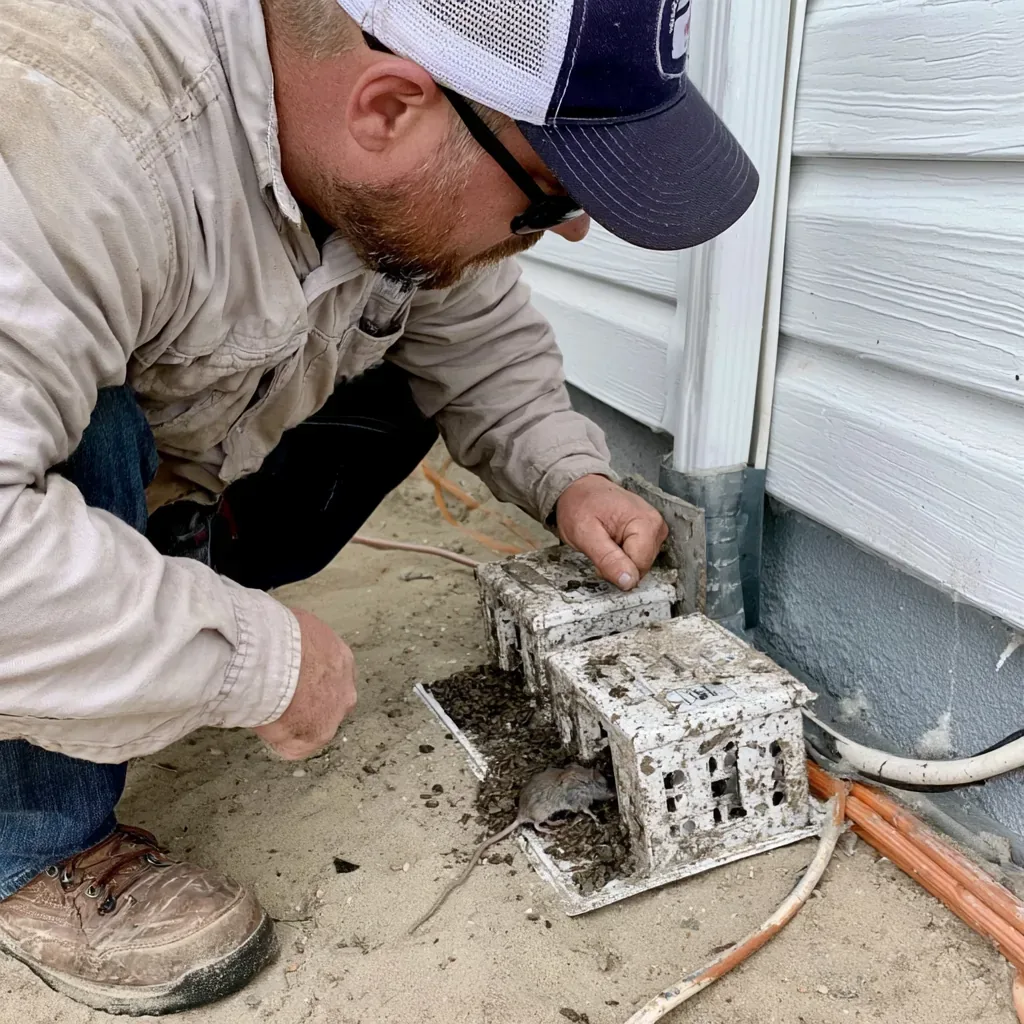
Sealing Access Points Helps Reduce Reentry
Dearborn has residential areas near Ford Woods Park and the Rouge River. Those landmarks help locate a property, but they do not establish rodent activity there. A provider needs to assess the house and its surroundings before planning station placement.
Greenfield Village and the Ford Community & Performing Arts Center are local reference points for Dearborn properties. Nearby landmarks do not determine whether a station is needed. The property’s access, activity signs, and household use guide the service plan.
In Dearborn and elsewhere in Wayne County, calls may come from someone who lives at the property or manages it. If you are asking for another owner, have the location and your authority to arrange service ready.
Reading Signs Around the Home
- PURPOSE
- The housing provides a set location for compatible bait; it does not close openings that rodents may use to enter a building.
- MODEL FIT
- Protecta name and model markings identify the station; a similar outline alone cannot confirm its brand.
- ACCESS
- Bait is a separate product, and its label governs its permitted placement and precautions.
- MONITORING
- A Protecta station carries its brand and model markings on the housing.
- LABEL RULES
- Ask which Protecta model and bait are planned, where the station will sit, and how label directions shape access and precautions.
- Property Conditions
- Dearborn’s cold winter conditions can change access to outdoor station locations. Snow, shifting yard use, or stored items may affect whether a planned spot stays reachable. The provider can review outdoor placements as conditions change and explain how checks will be handled.
- MATERIALS
- an estimated $40–$50
Tracks That Point to a Different Visitor
A snap trap captures rodents directly, while a bait station holds bait. The brand and model markings identify a Protecta product; the general shape does not. A provider’s service record can help identify a unit if its markings are worn. Compare those markings with the product information, or ask the provider to identify the unit. The bait’s product name appears separately on its packaging or service record.
Steps for Addressing Rodent Activity
The inspection can note food sources and sheltered areas that may influence the plan. The assessment includes where activity appears and how people use the area. Those findings guide the placement plan and any other recommended control steps.
If the plan includes Protecta bait stations, the provider selects positions based on observed activity, access, and site conditions. They explain how each unit will be checked and what precautions apply. The provider can record whether the unit is intact and still contains bait.
Cost depends on how far activity extends and whether access gaps can be handled during the first appointment. A contained route with workable repairs may need only that visit. Signs across rooms, inaccessible openings, or devices needing review support a planned return schedule. Ask what would trigger another visit.
WHAT TO CONSIDER BEFORE SELECTING A SERVICE PLAN
| Device Checks |
Food Storage |
|---|
| A minor concern at first signs | Safe droppings cleanup |
| New activity follows completed treatment | Sealed food storage |
| More than one access seam with fresh signs | Utility access blocked; control gear inspected |
TRAVEL PATTERNSMichigan does not issue a state license for this work. Ask whether the provider holds any relevant certification or training. Ask the provider’s service record to name the station and bait used and describe the placement plan.
Sounds Around Enclosed Home Spaces
Rodents can gnaw food packages, stored items, and building materials. If activity continues, damaged goods may need disposal and affected areas may need careful cleaning or repair. Check stored goods for damage before deciding what can be kept. A bait station does not seal entry gaps.
Read Bait Labels Before Use
From a safe distance, note the station’s location, visible markings, and whether its housing looks intact. Keep children and pets away. Do not open, move, refill, or handle it. Ask the provider to identify the model and explain the planned checks.
Understanding Rodent Product Directions
The product label sets the permitted placement and use of bait; a station does not change those directions. In Dearborn, ask the provider to explain the label precautions and the station’s check plan. If a station is moved, its placement may no longer fit the original site review. Contact the provider to reassess it, including at homes near Coogan Terrace or Kessey Fieldhouse.
Ask What Shapes the Service Charge
The pattern of activity can help show which areas need closer attention; ask the licensed pros we connect you with how they assess those signs.Dearborn quotes reflect inspection findings; a ranch, split-level, or property near Central Park, Church-Teller Park, or Community Park may call for different access or sealing work. The guide estimate covers discussed control steps; repairs and return checks are outside it unless added to the agreed scope. Ask which inspection observations informed the proposed control steps.Property details can shift estimates; consult pricing guide for rodent control ranges and cost factors.