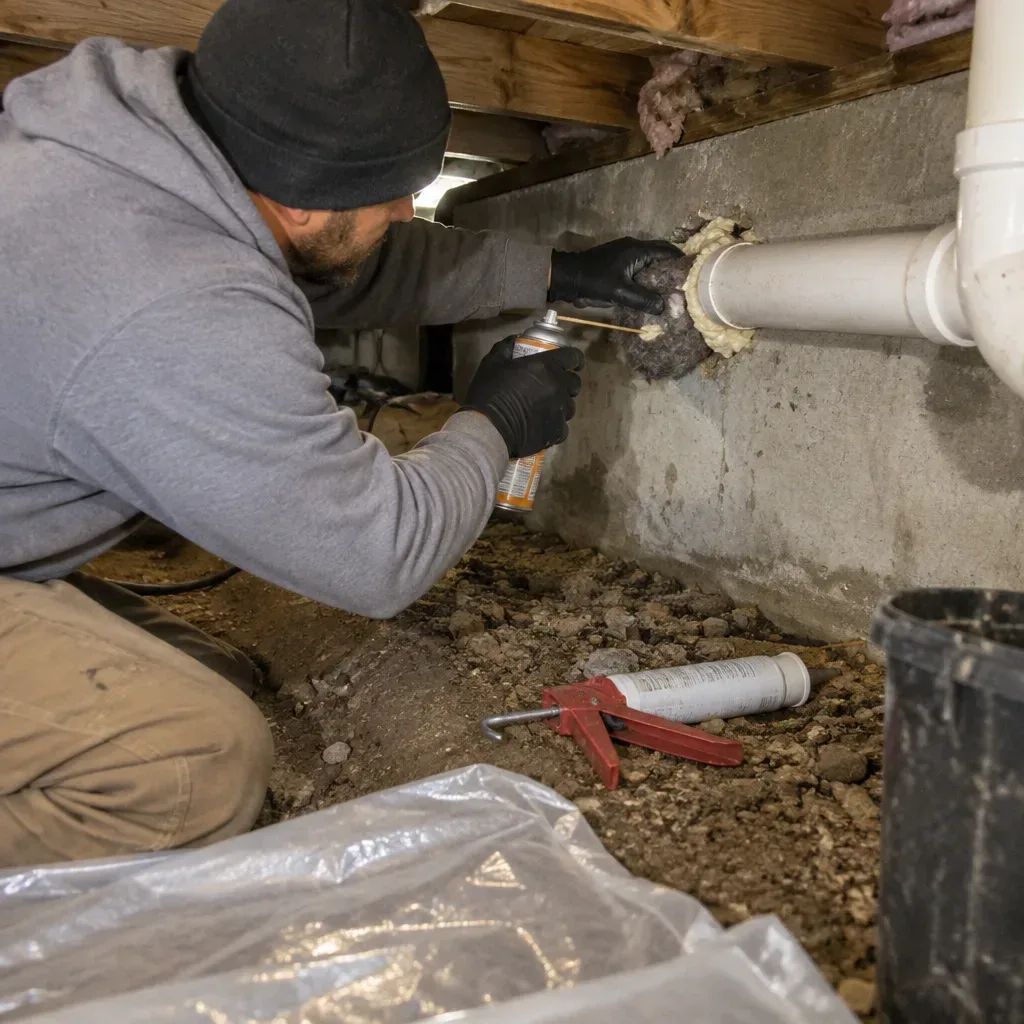
Where Steel Wool May Fit in Dearborn Homes
In Dearborn, start with signs near an opening, then consider its size, location, and exposure.
Steel wool can make gnawing harder at a small, stable opening if the fibers stay seated and dry. It is unsuitable near heat or where moisture, movement, or weak edges can dislodge or corrode it. It does not trap rodents or confirm activity has ended.
Read Rodent Signs Before the Opening
In Dearborn, rodent exclusion cost depends on the opening, access, and finish needed. Begin by looking for fresh droppings or gnaw marks, then note where they appear. A faint track beside a small gap can help connect activity with a possible route. The pros we connect you with can consider those signs alongside the opening’s size and exposure. A homeowner near Young Recreation Center may find a ranch layout easier to inspect than a split-level, but each property needs its own review.
Steel wool is a bundle of thin steel fibers. Packed into a small, stable opening, those fibers can make gnawing less practical for mice. They do not catch rodents or show whether activity has stopped. In Dearborn, a homeowner should treat the material as one possible exclusion aid, not proof that a route is closed. Droppings, sounds, or fresh marks nearby still matter. The location of those signs helps explain whether the opening deserves closer attention.
Next, observe the opening itself. A narrow gap with firm edges may hold fibers better than a wide or crumbling void. Note whether rain reaches the spot and whether people or equipment regularly disturb it. Near Parkland Park in Dearborn Heights, as in Dearborn, outdoor exposure can differ from one wall to another. Steel wool entry holes are most suitable when the material can stay dry and seated. A difficult view calls for an independent assessment before material is chosen.
Check Whether the Gap Is Small
A homeowner in Dearborn may find steel wool useful as a temporary measure while the opening is assessed. Its fibers create resistance at a small route, but they do not resolve activity elsewhere in the home. If scratching continues or fresh signs appear, the source may extend beyond the visible gap. Rodent control can involve inspection, trapping or baiting, and exclusion, depending on findings. The material alone cannot establish which steps fit the property.
Look at the edges before judging fit. If fibers appear loose, shift under light contact, or leave a visible opening, the route may remain usable. Forcing a large wad into a weak surface can damage the edge and still leave uncertainty. In Dearborn, the same concern applies to a ranch foundation or a split-level exterior. A sound, small opening gives the material a more plausible role; an unstable edge points to a different exclusion need.
Steel fibers are not a finished exterior surface. They can snag or remain visible, and they may not blend with siding, trim, or masonry. A durable sealant or another suitable material may be needed to protect the opening’s finish and keep fibers retained. A smooth edge can also make it easier to notice later if the repair shifts. In Dearborn, a homeowner should consider how the spot will look and hold up after weather reaches it, not only whether fibers fill the void.
Look for Moisture and Heat Exposure
Moisture changes the picture. Ordinary steel can corrode when it stays wet, and rust may mark nearby surfaces. In Dearborn, an opening under an overhang may stay drier than one exposed to driving rain, but the actual spot matters. Look for dampness or discoloration around the fibers after wet weather. Those visible changes can show that the material is not holding its condition. A dry appearance at one inspection does not ensure the opening stays dry.
Check for movement as well as moisture. Fibers that protrude farther than before, sag, or disappear from view may no longer sit securely. Record what changed and whether fresh droppings or gnaw marks appeared nearby. Dearborn homes can have different layouts and exterior details, so one observation does not explain every route. Nearby gaps around pipes or cables can offer another way inside even when the packed opening stays intact. Timing depends on the service plan.
Treat Steel Wool as a Limited Plug
Heat is another limit to check before considering steel wool. Metal conducts heat, so fibers beside hot equipment or a hot surface may create a concern for surrounding materials. In Dearborn, do not assume an opening is suitable just because it is small and dry. Observe what sits on the other side and nearby. If the setting is unclear, an independent local professional can assess it before a material is selected.
A hard-to-view opening can make its size, edge condition, or exposure difficult to judge. Note its position from a safe place, then describe what is visible to an independent local professional. A Dearborn homeowner near Central Park in Dearborn Heights may have a different exterior setting from a home elsewhere; the landmark does not predict the property’s condition. Inspection findings, not the neighborhood name, should guide whether steel wool has a suitable role.
Observe the Opening Before Choosing
- In Dearborn, note where signs appear, then record the opening’s size and position from a safe viewpoint.
- Check whether the location stays dry and sits away from hot surfaces or regular disturbance.
- Watch for rust, changed fiber position, or fresh signs that suggest the opening needs reassessment.
- Record the opening’s approximate width and whether steel wool can fit without protruding; cramped edges may make careful placement difficult.
- A loose seal around a pipe can let water seep behind the wall before it becomes visible.
- Notice nearby heat sources before considering steel wool; for a Dearborn home, a durable sealant or another material may suit the location better.
Rodent Control Basics
What signs should I check before considering steel wool for mice?
The opening should be checked for signs of active use before steel wool is packed into it. It does not capture rodents or remove signs of activity elsewhere. In Dearborn, fresh droppings or new gnaw marks after the opening is assessed may point to continued movement. The material is only one part of exclusion, and the right response depends on what an inspection finds around the property.
Which small openings can steel wool rodent control help address?
It fits best in a small opening with sound edges, little disturbance, and protection from moisture and heat. Loose, crumbling, exposed, or frequently handled locations are poor candidates because the fibers may shift or corrode. A Dearborn homeowner should observe the opening’s position and conditions before choosing any material. If those details are hard to assess, ask an independent local professional to inspect the spot.
Can I use steel wool near a furnace or other hot surface?
Yes. Ordinary steel wool can corrode if it remains damp, and rust can discolor nearby paint, trim, or masonry. Check for orange or brown marks and fibers that look weakened or displaced. In Dearborn, an exposed opening may receive more moisture than a sheltered one. If corrosion appears, the material may no longer be dependable there; the surface and exposure should be reassessed before another option is selected.
Have the Gap Assessed Before Sealing
For a rodent exclusion estimate, note the gap’s access and exposure; the pros we connect you with can assess whether steel wool fits.
Call (313) 944-5570